Material Logic Is Not an Aesthetic Preference
Why material decisions shape risk, cost, and delivery in integrated sculptural work.

Material choices are often described as matters of taste. In integrated sculptural work they are not.
Material logic describes how a material behaves structurally, optically, and in fabrication. It defines what a material does well, what it resists, and what it requires to perform reliably over time. This is not about styling. It is about aligning intention with physical reality.
If materials are treated as visual options after form is fixed, design is forced into custom fabrication, tight tolerances, and reactive coordination. Costs rise and certainty falls.
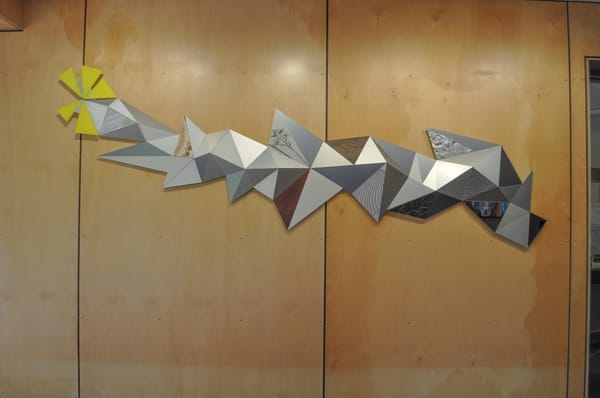
When material behaviour is considered early, form develops in dialogue with fabrication paths and assembly logic instead of against them. Standard extrusions, sheet forms, and glazing systems suggest particular methods of manufacture, transport, and installation. Designing within these paths keeps production predictable and buildable.
Buildings are not built to exact dimensions. Material logic includes understanding tolerance and allowing for it through fixing strategy so systems absorb variation without visual compromise.
Clear assembly logic enables prefabrication, reduces site time, and simplifies coordination with other trades. It also affects maintenance and future access.
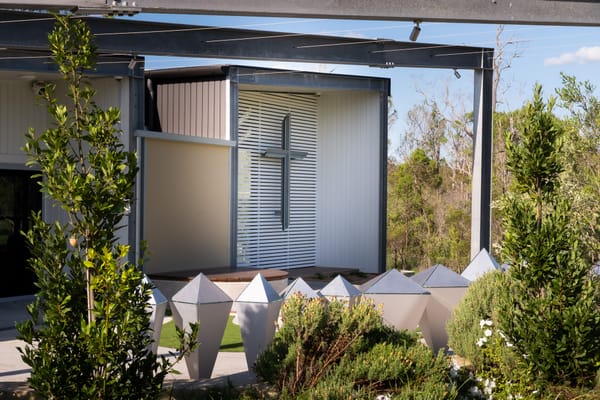
True integration occurs when sculptural work develops from the same material thinking as the architecture around it. This does not mean matching finishes. It means working with compatible systems, tolerances, and fabrication methods so sculptural elements feel inevitable within their context.