What changes when sculpture is integrated with a building
The difference between integrated and placed sculpture shows up in material selection, timing, procurement, and what happens five years after handover.

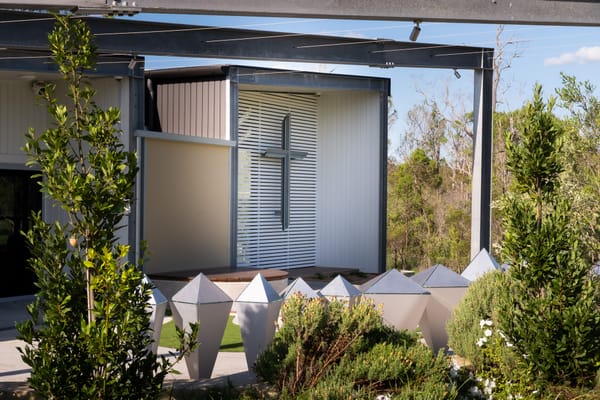
When Emmaus College in Jimboomba commissioned a second sculptural work in 2024, the brief was shaped by something the first work had already done. "Reflections", installed three years earlier, used anodised aluminium and glass at a threshold outside the school's Irbyana building. The materials had not degraded. The scale and placement still worked with the building's circulation. The second commission, "Emmaus Cross", could use the same material language because the first had proved it would hold.
That sequence only works when the sculpture is integrated with the architecture from the start. If Reflections had been a standalone object placed in a garden bed, the second work would have had no structural or material relationship to build on. The connection between the two pieces exists because both respond to the same threshold, the same materials, and the same building logic.
Integration means the sculptural work is developed alongside the building's architectural decisions. In practice, this affects four things: material selection, timing of engagement, procurement, and long-term maintenance.
Material selection in an integrated project responds to the building's own material logic. At Emmaus, the aluminium and glass were chosen because they matched the durability and maintenance profile of the building envelope. Anodised aluminium does not need repainting. Toughened glass meets AS 1288 for a school environment. These are architectural decisions that determine whether the work survives its first decade without intervention.
Timing matters because sculptural scope developed during concept or early design can be embedded in drawings and specification. It enters the procurement pathway the same way any other building system does, whether through nomination, provisional sum, or performance specification. For architects and project managers, this means the sculptural scope is documented, coordinated, and protected through the same processes that govern every other element of the building.
This is the practical difference. A placed sculpture can be relocated or substituted without affecting the building. An integrated sculptural system is part of the building's threshold condition. Removing it changes how the entrance or circulation space works.
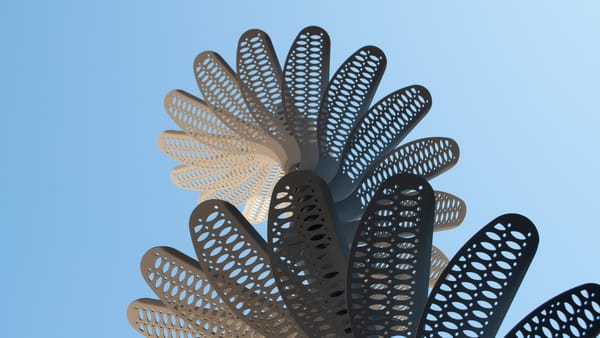
This approach to sculptural integration has precedent at every scale. Ned Kahn's wind-activated facades respond to weather conditions through thousands of hinged aluminium panels fixed to the building skin. The panels are the facade. They cannot be separated from the building without removing an entire elevation. At a different scale, the perforated metal screens on many Australian institutional buildings serve both solar control and spatial identity. When sculptural intent drives the design of these systems, the building gains a threshold condition that changes with light, movement, and time of day.
The common thread is that the sculptural element performs an architectural role. It controls light, defines an entrance, mediates between inside and outside, or marks a transition in a circulation sequence. This is what separates integrated work from a sculpture placed in a courtyard. The courtyard sculpture may be excellent, but the building does not depend on it.
At Emmaus College, the three-year gap between commissions tested whether the original work could support extension. The aluminium had not corroded. The glass had not failed. The material language was still legible against the building. When the school asked for a second work, the design conversation started from an established material and spatial logic.
This is what integration produces over time. The building and the sculptural system age together. Maintenance requirements align. Material behaviour is predictable because it was selected for the same environmental conditions as the rest of the envelope. For schools and institutions commissioning buildings with a thirty-year horizon, this matters more than how the work looks on handover day.
MARLINSPIKE develops integrated sculptural systems for architecture, typically engaged during concept or early design. The studio works with glass, aluminium, and architectural mesh systems, fabricated through Tier-1 manufacturing partnerships with AS 1288 compliance and industrial warranties.